
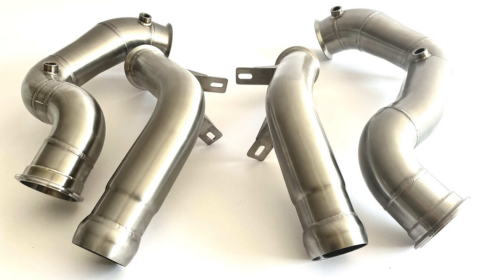
When it comes to unlocking real performance from high-end performance cars, few modifications deliver as much impact as upgrading the downpipes. Whether you’re working on a refined German powerhouse or an aggressive Italian SUV, the right setup can dramatically change how the car sounds, feels, and performs.
In this guide, we’ll break down what makes downpipes so important, how they differ between setups, and what you should know before upgrading your vehicle.
What Are Downpipes and Why Do They Matter?
Downpipes are a crucial part of a turbocharged car’s exhaust system. They connect the turbocharger to the rest of the exhaust and play a big role in how efficiently exhaust gases exit the engine.
Stock downpipes are usually restrictive because manufacturers prioritize emissions and noise regulations. Upgrading them allows for better airflow, reduced backpressure, and ultimately, improved performance.
This is where options like mercedes e63 w213 catted and catless downpipes come into play, offering flexibility depending on your goals.
Mercedes E63 W213 Downpipes: Catted vs Catless
The Mercedes E63 W213 is already a beast from the factory, powered by a twin-turbo V8 engine. However, upgrading the downpipes can push it to another level.
Catted Downpipes
Catted downpipes include high-flow catalytic converters. These are a great middle ground for enthusiasts who want better performance without completely sacrificing emissions compliance.
Benefits include:
- Noticeable power gains
- Reduced turbo lag
- Less aggressive exhaust smell compared to catless setups
- Street-friendly in many regions
They’re ideal for daily drivers who want performance without going overboard.
Catless Downpipes
Catless downpipes remove the catalytic converters entirely, allowing exhaust gases to flow freely. This results in maximum performance gains.
Advantages include:
- Significant horsepower and torque increase
- Faster turbo spool
- Aggressive, louder exhaust note
However, they come with trade-offs:
- Strong exhaust smell
- Possible check engine lights
- Not legal in many areas
Choosing between catted and catless ultimately depends on your priorities—comfort and compliance, or raw performance.
Lamborghini Urus Downpipes: Taking Performance to the Next Level
The Lamborghini Urus is a unique machine—it blends supercar DNA with SUV practicality. But despite its impressive stock performance, there’s always room for improvement.
Upgrading to lamborghini urus downpipes is one of the most popular modifications among owners looking to enhance both sound and power.
What Changes After Installation?
Once upgraded, the Urus feels noticeably more alive. The engine breathes better, resulting in:
- Sharper throttle response
- Increased horsepower
- More aggressive exhaust tone
The difference in sound alone is enough to transform the driving experience. The deep, roaring exhaust note becomes more pronounced, giving the Urus a true supercar presence.
Performance Gains You Can Expect
While exact numbers vary depending on tuning and supporting modifications, most downpipe upgrades offer:
- 30–80 horsepower increase
- Improved turbo efficiency
- Faster acceleration
- Enhanced driving dynamics
Pairing downpipes with an ECU tune can amplify these gains even further.
Installation and Considerations
Before jumping into a downpipe upgrade, there are a few practical things to keep in mind:
Professional Installation Recommended
Downpipes are located deep within the engine bay, making installation complex. It’s best handled by experienced professionals.
ECU Tuning
To fully benefit from upgraded downpipes, a proper ECU tune is often required. This ensures the engine adapts to the improved airflow.
Legal and Emissions Factors
Always check local regulations. Catless setups, in particular, may not be road-legal in many areas.
Final Thoughts
Upgrading downpipes is one of the most effective ways to enhance the performance of high-performance vehicles like the Mercedes E63 W213 and Lamborghini Urus. Whether you choose catted for balance or catless for maximum output, the difference is instantly noticeable.
For enthusiasts who crave better sound, sharper response, and increased power, this modification is hard to beat. Just be sure to align your choice with your driving style, local laws, and long-term goals.